
Lawn Weed Control
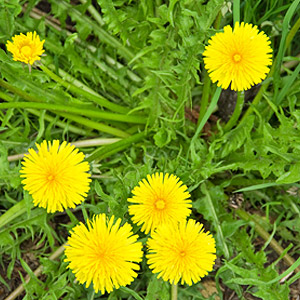
Common Dandelion (Taraxacum officinale)
Weed Control against: Common Dandelion
Dandelion is a common perennial weed throughout South Africa. Although it is a relatively weak competitor, it can be particularly troublesome in lawns. It spreads easily through seeds that are dispersed by even the slightest breeze, travelling several hundred metres from their source. The plant typically grows from an unbranched taproot and produces one to more than ten stems, which are sparsely covered with short hairs and bear distinctive yellow flowers.
Dandelion readily colonises disturbed habitats through both wind-dispersed seeds and germination from the soil seed bank. Seeds can remain viable in the soil for many years, with studies showing germination after up to nine years. This species is a prolific seed producer, with each flower head producing between 54 and 172 seeds, and a single plant capable of producing more than 5 000 seeds annually.
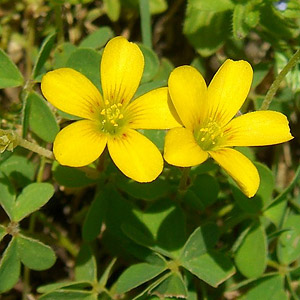
Creeping Sorrel (Oxalis corniculata)
Weed Control against: Creeping Sorrel
This is a delicate, low-growing, herbaceous plant in the family Oxalidaceae. It has a slender, creeping stem that readily roots at the nodes. The trifoliate leaves are divided into three rounded leaflets, giving them a clover-like appearance. The fruit is a narrow, cylindrical capsule, 1–2cm in length, notable for the explosive discharge of its approximately 1mm long seeds.
It is a common problem in lawns and is regarded as a troublesome weed due to its ability to persist perennially through underground stolons. It may also serve as a host for plant diseases, including various types of rust.

Lotus (Lotus subbiflorus)
Weed Control against: Lotus subbiflorus
A relatively recent introduction to South Africa, this species is widespread in the Western and Eastern Cape, where it forms dense mats in moist areas. It presents particular challenges in lawns, as it can outcompete and overwhelm many grass species.
Lotus subbiflorus is a flowering plant in the pea family, Fabaceae. It is a finely hairy annual that produces sprawling stems bearing clusters of two to four small, lemon-yellow, pea-type flowers.

White Clover (Trifolium repens)
Weed Control against: White Clover
White clover is a herbaceous perennial plant and a common, widespread weed, particularly in lawns where it is unsightly and can displace grass. It is low-growing, producing flower heads that are typically white, often with a tinge of pink or cream as the plant matures.
The stems function as stolons, allowing white clover to form dense mats. These creeping stems can extend up to 18cm per year and readily root at the nodes. The plant is well adapted to poorer soils, where it can maintain green cover in conditions that are less favourable for lawn growth. Clover is often regarded as a weed in lawns, partly because its flowers attract bees, which may pose a risk to people walking barefoot.

Wintergrass (Poa annua)
Weed Control against: Wintergrass
This grass is a relatively small, bright green annual plant that grows throughout the year in damp, shady areas, but is particularly noticeable in winter. It can be a troublesome and unsightly weed in gardens and lawns, often occurring near places such as leaking taps where the soil is too damp for other species.
It flowers throughout the year, except during severe winters. Seeds ripen and are shed over an eight‑month period. The plant grows rapidly from seed, flowering within six weeks, setting seed, and then dying. It is extremely difficult to control, as the seeds can remain dormant in the soil for up to six years before germinating.

Yellow Nutsedge (Cyperus esculentus)
Weed Control against: Yellow Nutsedge
This weed is often mistakenly referred to as a grass, but it is actually an annual or perennial sedge. It reproduces from tubers that are formed in large numbers underground at the ends of its rhizomes. A single tuber can produce up to 1 900 plants and, in turn, nearly 7 000 additional tubers. These plants are serious, highly competitive weeds, not only because they are widespread, difficult to control, and aggressive, but also because they can release toxins that suppress the growth of other plants.
The plant is extremely difficult to eradicate completely from lawns and gardens, where it is regarded as a highly intrusive weed. This is due to its stratified, layered root system, with tubers and roots interconnected to depths of 36cm or more. The tubers are linked by fragile roots that are prone to snapping when the plant is pulled, making it very difficult to remove the entire root system intact.